
Why Cybersecurity Is Important for Small and Medium Businesses (SMBs)
Cybersecurity is no longer a concern reserved for large corporations. Small and medium businesses (SMBs) are increasingly becoming targets of…


Best Cybersecurity Tools for Preventing Cyber Threats in 2026
Discover the best cybersecurity tools for preventing cyber threats in 2026. Learn how businesses can protect data, stop malware, and…

How Do Firewalls Work for Small Businesses? A Complete Guide to Network Security
Cybercriminals don't just target large enterprises anymore. In fact, small businesses have become some of the most attractive targets for…
Cybersecurity Checklist for Businesses: Essential Steps to Protect Your Company
Cyberattacks are no longer just a problem for large enterprises. Small and medium-sized businesses (SMBs) are increasingly targeted because attackers…

What is Endpoint Security for Businesses in Simple Terms?
Learn what endpoint security is, why businesses need it, and how to protect laptops, phones, and servers from cyber threats…

Serverless Security Solutions: Protecting Modern Cloud-Native Businesses
Discover serverless security solutions, key risks, and best practices businesses need to secure cloud-native applications.
Malware Detonation Chambers: How Businesses Safely Analyze and Stop Malware Before It Spreads
Learn how malware detonation chambers work, why businesses use them, and how sandbox-based malware analysis strengthens cybersecurity defenses.
TLS Inspection Tools: A Business Guide to Encrypted Traffic Visibility and Threat Detection
Learn how TLS inspection tools work, why businesses use them, and how to choose the right solution to inspect encrypted…
Automated Remediation Tools: How Businesses Can Accelerate Cyber Incident Response
Cyberattacks no longer unfold over weeks—they often escalate within minutes. For many businesses, especially small and medium-sized enterprises (SMEs), security…
Ransomware Sandboxing: How Businesses Can Detect and Contain Modern Cyber Threats
Learn how ransomware sandboxing helps businesses detect, isolate, and analyze threats before they spread. Strengthen cyber defense today.
File Integrity Monitoring Software: Why Small and Mid-Sized Businesses Need It More Than Ever
Learn how file integrity monitoring software helps small and mid-sized businesses detect unauthorized changes, meet compliance requirements, and prevent costly…
Next-Gen Antivirus for Businesses: How AI-Powered Protection Is Redefining Cybersecurity in 2026
Discover how next-gen antivirus protects businesses from modern cyber threats using AI, behavioral analysis, and real-time threat detection.
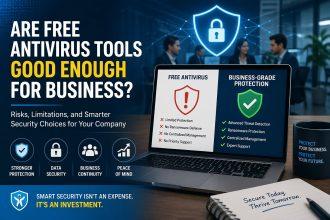
Are Free Antivirus Tools Good Enough for Business? A Practical Guide for Small Companies
Are free antivirus tools enough for business? Learn the risks, limitations, and better alternatives to protect your company from cyber…
How to Secure a Business Wi-Fi Network (Step-by-Step Guide)
Learn how to secure a business Wi-Fi network with proven strategies to protect company data, prevent breaches, and ensure reliable…
What are cloud-native security platforms?
Cloud-native security platforms are security solutions built to protect cloud-based applications across their entire lifecycle—from development to deployment to runtime.
Active Directory Hardening: A Complete Guide for Businesses
Learn Active Directory hardening best practices to protect your business from cyberattacks, reduce risks, and secure enterprise identity systems.
Best Cybersecurity Practices for Startups in 2026: A Complete Guide
Discover the best cybersecurity practices for startups in 2026, including essential tools, threat prevention strategies, and security best practices.

Secure Software Development Lifecycle (SSDLC): A Complete Guide for Businesses
Learn how to implement a Secure Software Development Lifecycle (SSDLC) to protect your business from cyber threats and ensure compliance.
What to Do After a Cyber Attack: A Step-by-Step Business Guide
Understanding what to do immediately after a cyber attack is critical. The decisions made in the first hours can determine…
Automated Vulnerability Scanning for Businesses: Strengthening Cybersecurity Before Threats Strike
Learn how automated vulnerability scanning helps businesses detect security weaknesses early, reduce cyber risk, and strengthen protection against attacks.
Log Correlation Engine: A Complete Guide for Business Cybersecurity
Learn how a log correlation engine strengthens cybersecurity by detecting threats in real time, improving visibility, and reducing response time.

Cloud Workload Protection Platforms: Securing Your Business in the Cloud
Protect your business workloads in the cloud with advanced Cloud Workload Protection Platforms (CWPPs) and safeguard against cyber threats.

Network Intrusion Detection Systems: A Complete Guide for Business Security
Cyberattacks are no longer a question of if—but when. For businesses of all sizes, especially SMEs, the challenge is detecting threats before…

SIEM vs SOAR Platforms: Which Is Right for Your Business?
Businesses of all sizes face increasing cyber threats. While technology provides powerful tools to defend against attacks, knowing which solutions…
Firewall as a Service (FWaaS): A Complete Guide for Modern Businesses
What Is Firewall as a Service (FWaaS)? Firewall as a Service (FWaaS) is a cloud-based cybersecurity solution that delivers firewall protection…
EDR vs XDR Comparison: Which Cybersecurity Solution Is Right for Your Business?
Cyberattacks are no longer simple, single-point intrusions—they’re multi-layered, stealthy, and fast-moving. If your business is still relying on traditional antivirus…
Serverless Security Solutions: A Complete Guide for Businesses in 2026
Discover serverless security solutions, benefits, risks, and best practices to protect cloud-native applications and business data.

Malware Detonation Chambers: A Critical Cybersecurity Tool for Modern Businesses
Learn how malware detonation chambers work, why businesses use them, and how they strengthen threat detection and malware protection strategies.
Network Segmentation Policy for Businesses: A Practical Guide to Strengthening Cybersecurity
Learn how a network segmentation policy protects business systems, reduces cyber risk, and limits breach damage with practical implementation steps.
Telus Cybersecurity Incident – Latest Cybersecurity News & Impact
A major data breach linked to the ShinyHunters hacking group could involve hundreds of terabytes—or even a petabyte—of stolen data. A large cybersecurity incident involving Telus, one of Canada’s biggest telecommunications and digital services companies, is currently under investigation. The company confirmed that attackers gained unauthorized access to some internal systems after claims by the cyber‑extortion group ShinyHunters that it stole massive amounts of data. The scale of the alleged breach has drawn global attention, with hackers claiming to have exfiltrated hundreds of terabytes to nearly 1 petabyte of data, which would make it one of the largest telecom‑related cyber incidents in recent years. What Happened With the Telus Cybersecurity Incident The breach centers around systems belonging to Telus and its digital services division, Telus Digital, which provides business process outsourcing and support services for companies around the world. Key details currently known: The company is currently working with cyber‑forensics teams and law enforcement while determining exactly what information may have been exposed. Who the Telus Cybersecurity Incident Affects The potential impact goes far beyond a single company. According to reports and samples shared by the attackers, the stolen data may include: Because Telus Digital operates outsourced support and customer‑service platforms for many organizations, a breach there could expose information from numerous companies at once. Expert Commentary on the Telus Cybersecurity Incident Security researchers describe the attack as a targeted data‑extortion operation rather than traditional ransomware. Instead of immediately encrypting systems, attackers appear to have: That tactic is common for ShinyHunters, a cybercrime group active since 2019 that has carried out numerous high‑profile data breaches and extortion campaigns against global companies. In this case, the attackers claim they accessed Telus systems using cloud credentials obtained during another breach involving the Salesloft Drift platform. How to Stay Safe From the Telus Cybersecurity Incident Even if you’re not a Telus customer, breaches involving service providers can still affect your data indirectly.…
BISO – The Operational Bridge Between Cybersecurity and Business Lines
What Happened With the BISO Role The Business Information Security Officer (BISO) has emerged as a key cybersecurity role designed to close the gap between technical security teams and business operations. Instead of working purely within IT or security departments, a BISO is embedded directly within specific business units, helping those teams integrate cybersecurity into daily operations. Traditionally, companies relied heavily on a Chief Information Security Officer (CISO) to oversee security strategy across the entire organization. However, as businesses became more digital and complex, a single centralized role often struggled to address the unique security needs of individual departments. The BISO concept solves this by acting as a local extension of the CISO, working closely with operational teams while still aligning with the organization’s broader security policies. In practice, this means the BISO is responsible for ensuring that cybersecurity requirements make sense for the specific environment where the business actually operates — whether that’s energy infrastructure, cloud services, manufacturing systems, or smart buildings. Who the BISO Role Affects The BISO role primarily affects large enterprises and organizations with multiple business units, such as energy companies, utilities, financial institutions, or multinational technology firms. Because these organizations operate across many departments, each unit faces different cyber risks and regulatory requirements. The BISO helps tailor security strategies to those realities. Typical stakeholders who interact with a BISO include: The BISO acts as a two-way translator between these groups. They convert technical cybersecurity concerns into business risk language and ensure business priorities are reflected in security planning. For example, instead of telling executives that “a server vulnerability exists,” a BISO might explain that a vulnerability could interrupt a revenue-generating service or expose customer data, making the risk easier for decision‑makers to understand. Expert Commentary on the BISO Role Cybersecurity experts often describe the BISO as a “business-facing CISO.” The role focuses less on building technical defenses and more on ensuring that security becomes a natural part of operational processes. Key responsibilities commonly include: During incidents such as ransomware attacks or data breaches, the BISO can also support crisis management by coordinating with affected business teams and clients while helping restore trust. Despite its benefits, the role comes with challenges. Because BISOs often influence teams they do not directly manage, they must constantly balance business priorities, regulatory obligations, and cybersecurity requirements.…
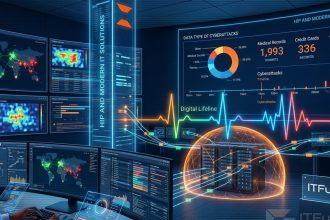
Digital Lifeline: Why 2026 is the Year Healthcare Cybersecurity Became Critical
African healthcare providers are facing a 38% surge in cyberattacks as of early 2026, forcing a shift from treating digital…
Automated Remediation Tools: Streamlining Cybersecurity for Businesses
Meta Description: Automate threat response with automated remediation tools to protect your business, reduce downtime, and enhance cybersecurity efficiency. In today’s…
Cybersecurity Posture Management: Strengthening Your Business Defenses
Strengthen your business cybersecurity posture with proactive management strategies, advanced threat prevention, and multi-device protection.
Ransomware Sandboxing: How Businesses Can Detect and Prevent Threats
Learn how ransomware sandboxing helps businesses detect threats early and protect sensitive data from costly attacks.

Secure Enclave Technology: A Business Guide to Hardware-Based Data Protection
In a world where data breaches cost businesses millions and reputations can be destroyed overnight, traditional software-based security is no…

Next‑Gen Antivirus: The Future of Business Cybersecurity
In today’s threat landscape, traditional antivirus solutions aren’t enough to protect businesses from sophisticated attacks. Cybercriminals are constantly evolving their…
Hardware Security Modules (HSM): A Critical Layer of Cybersecurity for Businesses
Imagine putting your company's most sensitive data behind a lock—and then leaving the key under the doormat. That's essentially what…
SIEM with Behavioral Analytics: Enhancing Threat Detection for Businesses
SIEM (Security Information and Event Management) systems collect, normalize, and analyze log data from across your IT infrastructure to detect potential…
Email Security Filtering Appliances: Protecting Business Communications
Phishing scams, malicious attachments, business email compromise (BEC) — these threats often start with a single, unsuspecting email. For businesses…
Secure Software Development Lifecycle: A Business Guide to Safer Applications
Did you know that 84% of software attacks exploit vulnerabilities at the application layer? For businesses, this is a critical…

Automated Vulnerability Scanning
A delay of even a few days in patching critical vulnerabilities can cost a company thousands (or more) in breach…
API Security Gateway: Protecting Your Business from Modern Cyber Threats
Learn how an API security gateway protects businesses from cyberattacks, prevents data breaches, and ensures secure digital operations. Why API…
Why Every Business Owner Should Be Using Multi‑Factor Authentication (MFA)
Imagine this: one of your managers—maybe the one who handles finances—clicks a phishing email. They type in their password. Just…
Mobile Threat Defense: Protecting Your Business in a Mobile-First World
Mobile Threat Defense is your business’s shield against mobile cyber threats—detecting, analyzing, and neutralizing risks in real time. Mobile devices…
IAM for Multi‑Cloud Environments
Does your business rely on AWS, Azure, GCP, or even private clouds simultaneously? You're not alone—most organizations now operate in…
Cyber Threat Intelligence Platforms
Is your business trying to fight cyber threats with patchwork tools and reactive response? Threat intelligence overload and siloed teams…

Can Cybersecurity Help with Customer Data Protection?
Protecting your customers’ data isn’t just a nice-to-have — it’s a must. Whether you’re a small online shop or a…
Privileged Access Management (PAM): A Critical Cybersecurity Shield for Businesses
Imagine giving your employees as little access as possible—only what they absolutely need—to perform their job functions. That’s the essence…
How Much Does Cybersecurity Cost for Small Businesses?
Imagine you’re the owner of a cozy little business—maybe a boutique, a small law firm, or a snappy tech startup…