

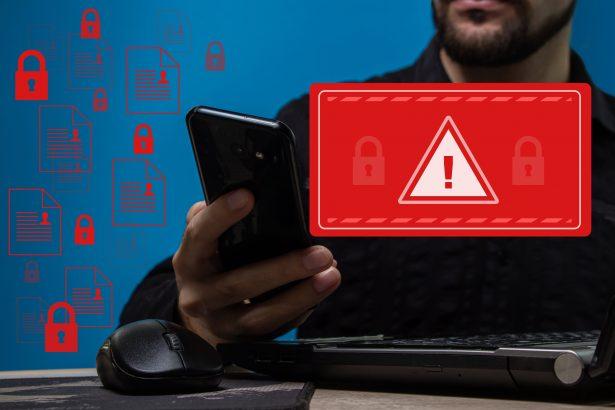
Imagine this: one of your managers—maybe the one who handles finances—clicks a phishing email. They type in their password. Just that. Suddenly, a cybercriminal has the keys to some of your most sensitive systems.
Sounds scary—but it’s disturbingly common. In fact, attacks that exploit stolen or weak credentials remain one of the biggest gateways into company systems. Single‑layer defenses like just a password are no longer enough.
That’s where Multi‑Factor Authentication (MFA) comes in. It’s a relatively simple change, but one that can drastically reduce your risk. Here’s how it works, why it matters, and how to put it in place without pain.
Cybersecurity for Business
Your business faces constantly evolving cyber threats that can jeopardize sensitive data, disrupt operations, and damage your reputation. Our cybersecurity for business solutions are tailored to meet the unique challenges of companies of all sizes, providing robust protection against malware, phishing, ransomware, and more.
Whether you’re a small startup or a large enterprise, we offer multi-license cybersecurity packages that ensure seamless protection for your entire team, across all devices. With advanced features like real-time threat monitoring, endpoint security, and secure data encryption, you can focus on growing your business while we handle your digital security needs.
Get a Free Quote Today! Safeguard your business with affordable and scalable solutions. Contact us now to request a free quote for multi-license cybersecurity packages designed to keep your company safe and compliant. Don’t wait—protect your business before threats strike!
What Is MFA, Really?
MFA means “more than one way to prove who you are.” Instead of just entering a password, a user must also provide something else—like:
- Something they have — a phone, a security key, a token.
- Something they are — fingerprint, face ID, etc.
- Something they know — password, PIN, etc.
So even if someone steals a password, without access to that other factor (say, the user’s phone or biometric trait), they get stuck.
Why Use MFA? The Big Benefits
Here are concrete reasons MFA is more than just another security checkbox. For a business, the upside is huge.
1. Dramatically reduces risk of breach
- MFA can block around 99.2% of account compromise attacks that come from credential theft.
- Accounts with MFA are overwhelmingly less likely to be breached—even when credentials have already leaked.
2. Guards against password reuse, weak passwords & phishing
- 94% of passwords are reused across two or more accounts.
- Passwords that are short, simple, or reused are frequently the weak link. MFA adds a second barrier so even if a password is guessed or stolen, that by itself won’t get an attacker in.
3. Helps meet compliance & regulatory demands
Many compliance frameworks require stronger identity verification. If your business handles regulated data (financial, health, personal data, etc.), or must satisfy customers and partners, MFA can be nonnegotiable.
4. Builds customer and stakeholder trust
When clients, suppliers, or partners know you take identity security seriously, that reflects well on your credibility. A breach can damage reputation—MFA is a clear and visible defense that shows you’re proactive.
5. Low cost, high return
- Many services already support MFA, often at no extra cost.
- The implementation effort is modest, especially compared to the cost of a data breach (financial costs, downtime, loss of confidence).
- The “step up” required from users is small—entering a code or approving via app—but the payoff is large.
6. Helps protect remote access & sensitive roles
If employees access network resources remotely (VPN, remote desktop, cloud tools), or if you have roles with elevated privileges (admins, financial control, etc.), MFA adds critical layers. Attackers often try to bypass perimeter defenses via credential hacks; MFA helps defend that point of access.
Real‑World Stats & Warnings
Knowing the numbers helps. Here are a few that should stand out if you own or run a business:
- Over 80% of hacking‑related breaches happen because of weak or reused credentials.
- Weak credentials and misconfigurations in cloud systems are often the root cause of network intrusions.
- MFA isn’t perfect, but accounts using strong MFA methods are vastly less likely to be compromised—even if their passwords are leaked.
Common Concerns & How to Mitigate Them
As a business owner, you’ll hear or worry about trade‑offs. Here’s what people often ask—and how to handle each concern.
| Concern | What People Worry About | How to Address It |
|---|---|---|
| User friction | Extra step means more work for employees, maybe complaints. | Pick methods that are user‑friendly (authentication apps, push notifications). Train staff. Use adaptive MFA (only when risk is higher). |
| Cost / setup overhead | Equipment, support, changing workflows. | Many platforms already include MFA. For extra tools, focus first on critical systems and roles. ROI usually justifies it. |
| Reliance on “weak” factors | SMS codes, for example, can be intercepted; biometrics have privacy concerns. | Use stronger methods where possible (hardware keys, app‑based tokens). Combine security with policy. Stay updated on best practices. |
| Recovery challenges | If someone loses their second factor (phone, key), what then? | Build fallback procedures—backup codes, alternative verification, trusted contacts. Ensure clear policies and testing for this. |
Best Practices for Putting in MFA
To get the most value from MFA, adopt best practices. It’s not enough just to “turn it on”—you also need to do it well.
- Start with high‑risk systems and users
Focus on admin accounts, financial tools, remote access gateways first. - Choose strong 2nd/3rd factors
Push notifications, app‑based authenticators, hardware tokens are stronger than SMS in many cases. - Implement adaptive or risk‑based MFA
Trigger MFA only when needed—new device, new location, suspicious activity—to balance security and user experience. - Make MFA mandatory
Don’t leave it optional for critical accounts. Set policies so that anyone accessing sensitive data must use MFA. - Educate your team
Explain why MFA matters. Show users how to set up backup codes. Make sure they understand phishing risks, so they’re not tricked into giving away codes. - Monitor and test
Regularly review logins, alerts, failed attempts. Simulate attacks (e.g. phishing) to test awareness. Ensure recovery processes work.
Limitations & What MFA Doesn’t Solve Alone
To be fair, MFA isn’t a silver bullet. Understanding its limits helps avoid overconfidence.
- Some MFA methods are weaker — SMS, email codes, etc., have known vulnerabilities.
- Social engineering & phishing — some attacks trick users into giving up both password and second factor.
- User resistance or misconfiguration — if it’s poorly implemented, left optional, or has weak fallback, MFA’s effectiveness drops.
- Device theft or loss — if someone steals a device used for MFA, extra policies need to guard against misuse.
So MFA works best when paired with other good security practices: strong password policies, least privilege access, vigilant monitoring, incident response plans, etc.
Why MFA + SpyHunter Multi‑License Is a Strong Combo
Here’s where things get even more practical if you’re looking for tools and protection:
- SpyHunter’s Multi‑License feature allows businesses to protect multiple endpoints/users under one license. That means you can enforce MFA across your team without buying individual licenses repeatedly.
- SpyHunter’s anti‑malware tools add another layer: even if a threat bypasses or undermines authentication (say via malware), having robust endpoint protection helps with detection and recovery.
- Together, MFA and SpyHunter’s multi‑license approach help you build layered defense: prevention + detection + response.
Conclusion: MFA Isn’t Optional in Today’s Landscape
If you run a business in 2025, ignoring MFA is like leaving a store front door unlocked—while windows are wide open, too. Hackers rely on shortcuts, and weak authentication is one of their favorites. But you get a lot of protection for relatively little investment.
Next steps:
- Audit your systems: find where passwords are used without MFA.
- Choose strong MFA methods (apps, tokens) and enable them for critical roles.
- Train your employees.
- Consider bundled tools, like SpyHunter with multi‑license support, to help manage protection across all your digital assets.
By taking these steps, you reduce risk, protect your data, safeguard your reputation—and give yourself peace of mind.
Cybersecurity for Business
Your business faces constantly evolving cyber threats that can jeopardize sensitive data, disrupt operations, and damage your reputation. Our cybersecurity for business solutions are tailored to meet the unique challenges of companies of all sizes, providing robust protection against malware, phishing, ransomware, and more.
Whether you’re a small startup or a large enterprise, we offer multi-license cybersecurity packages that ensure seamless protection for your entire team, across all devices. With advanced features like real-time threat monitoring, endpoint security, and secure data encryption, you can focus on growing your business while we handle your digital security needs.
Get a Free Quote Today! Safeguard your business with affordable and scalable solutions. Contact us now to request a free quote for multi-license cybersecurity packages designed to keep your company safe and compliant. Don’t wait—protect your business before threats strike!