Businesses of all sizes face increasing cyber threats. While technology provides powerful tools to defend against attacks, knowing which solutions to implement is crucial. Two of the most commonly discussed cybersecurity platforms are SIEM and SOAR. Many business leaders ask: What’s the difference, and which is right for my company?
This guide breaks down the key differences, benefits, and practical applications for businesses.
Cybersecurity for Business
Your business faces constantly evolving cyber threats that can jeopardize sensitive data, disrupt operations, and damage your reputation. Our cybersecurity for business solutions are tailored to meet the unique challenges of companies of all sizes, providing robust protection against malware, phishing, ransomware, and more.
Whether you’re a small startup or a large enterprise, we offer multi-license cybersecurity packages that ensure seamless protection for your entire team, across all devices. With advanced features like real-time threat monitoring, endpoint security, and secure data encryption, you can focus on growing your business while we handle your digital security needs.
Get a Free Quote Today! Safeguard your business with affordable and scalable solutions. Contact us now to request a free quote for multi-license cybersecurity packages designed to keep your company safe and compliant. Don’t wait—protect your business before threats strike!
What Is SIEM?
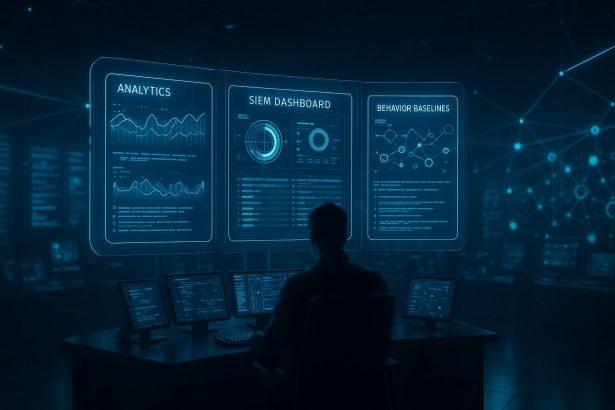
SIEM stands for Security Information and Event Management. It is a platform that collects and analyzes security data from across your organization’s network.
Key Functions of SIEM:
- Log collection and analysis: SIEM aggregates logs from servers, endpoints, firewalls, and applications.
- Threat detection: Uses predefined rules and correlations to flag unusual behavior.
- Compliance reporting: Helps businesses meet regulatory requirements such as GDPR, HIPAA, or PCI-DSS.
Example: A SIEM platform can detect multiple failed login attempts across several systems, signaling a potential brute-force attack.
Business Benefits of SIEM:
- Centralized security visibility.
- Faster identification of potential threats.
- Supports compliance audits.
What Is SOAR?
SOAR stands for Security Orchestration, Automation, and Response. While SIEM focuses on collecting and analyzing data, SOAR helps automate the response to threats.
Key Functions of SOAR:
- Automation: Automatically responds to known threats, e.g., blocking IP addresses or quarantining infected files.
- Orchestration: Integrates multiple security tools, including SIEM, firewalls, and endpoint protection.
- Incident management: Provides playbooks for handling complex security events efficiently.
Example: If a phishing email is detected, a SOAR platform can automatically isolate the affected mailbox, notify employees, and log the incident for review.
Business Benefits of SOAR:
- Reduces the time to respond to cyber incidents.
- Minimizes manual work for IT teams.
- Enhances consistency in incident handling.
SIEM vs SOAR: Key Differences
| Feature | SIEM | SOAR |
|---|---|---|
| Primary Function | Data collection, threat detection | Automated response, orchestration |
| Focus | Visibility and analysis | Action and mitigation |
| Human Involvement | High (analysis and response often manual) | Lower (automation handles routine responses) |
| Integration | Collects from multiple systems | Connects and coordinates multiple tools |
| Use Case | Detecting security anomalies | Responding to and managing incidents |
Bottom line: SIEM is like a security camera system alerting you to problems, while SOAR is the automated security team that acts on those alerts.
How Businesses Can Use SIEM and SOAR Together
For most businesses, the most effective strategy is using SIEM and SOAR in tandem:
- Detection: SIEM identifies potential threats and raises alerts.
- Automation: SOAR executes predefined response actions to contain and mitigate threats.
- Review: Security teams analyze incidents, fine-tune alerts, and improve playbooks.
Example Scenario:
- SIEM detects ransomware activity in the network.
- SOAR isolates affected endpoints and notifies IT staff automatically.
- Security team investigates, preventing further spread and documenting the incident.
This combination drastically reduces response time and improves overall cybersecurity posture, especially for small and medium-sized enterprises (SMEs) that may have limited IT staff.
Choosing the Right Platform for Your Business
When deciding between SIEM and SOAR, consider:
- Company size: SMEs may benefit from SOAR automation to reduce workload.
- Regulatory requirements: If compliance is a top priority, SIEM is essential.
- IT resources: Businesses with small IT teams can benefit from SOAR’s automated workflows.
- Existing tools: SOAR is most effective when integrated with SIEM, firewalls, endpoint protection, and antivirus solutions.
Pro tip: Investing in comprehensive security software with multi-license options, like SpyHunter, ensures all endpoints in your organization are protected while complementing SIEM and SOAR workflows. Multi-license deployments save costs and simplify management for businesses. You can purchase it here.
Conclusion
Understanding the difference between SIEM and SOAR is vital for business cybersecurity planning.
- SIEM: Monitors, analyzes, and alerts on threats.
- SOAR: Automates response and coordinates security tools.
For most businesses, combining both solutions creates a proactive, automated, and efficient security system. Integrating SIEM and SOAR with endpoint protection tools like SpyHunter ensures comprehensive protection against malware, ransomware, and other cyber threats.
Take action today: Evaluate your business’s cybersecurity needs, explore SIEM and SOAR options, and implement multi-license endpoint protection to safeguard your company from modern threats.
Cybersecurity for Business
Your business faces constantly evolving cyber threats that can jeopardize sensitive data, disrupt operations, and damage your reputation. Our cybersecurity for business solutions are tailored to meet the unique challenges of companies of all sizes, providing robust protection against malware, phishing, ransomware, and more.
Whether you’re a small startup or a large enterprise, we offer multi-license cybersecurity packages that ensure seamless protection for your entire team, across all devices. With advanced features like real-time threat monitoring, endpoint security, and secure data encryption, you can focus on growing your business while we handle your digital security needs.
Get a Free Quote Today! Safeguard your business with affordable and scalable solutions. Contact us now to request a free quote for multi-license cybersecurity packages designed to keep your company safe and compliant. Don’t wait—protect your business before threats strike!