

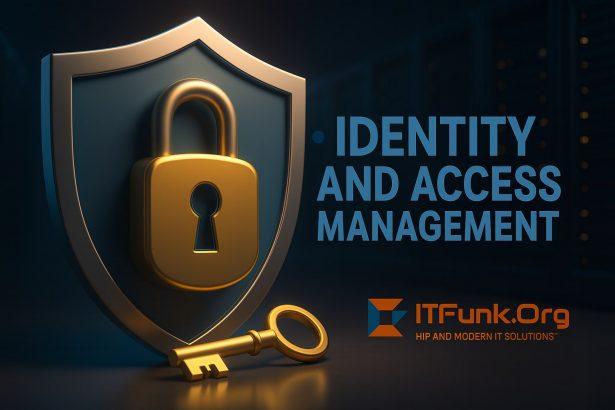
Does your business rely on AWS, Azure, GCP, or even private clouds simultaneously? You’re not alone—most organizations now operate in multi‑cloud environments, typically using multiple public and private clouds. But this agility also introduces complexity: fragmented identity stores, inconsistent access controls, and sprawling permissions that increase risk and hamper compliance. Let’s tackle how to build a robust IAM strategy that secures identities and simplifies control across all clouds.
Cybersecurity for Business
Your business faces constantly evolving cyber threats that can jeopardize sensitive data, disrupt operations, and damage your reputation. Our cybersecurity for business solutions are tailored to meet the unique challenges of companies of all sizes, providing robust protection against malware, phishing, ransomware, and more.
Whether you’re a small startup or a large enterprise, we offer multi-license cybersecurity packages that ensure seamless protection for your entire team, across all devices. With advanced features like real-time threat monitoring, endpoint security, and secure data encryption, you can focus on growing your business while we handle your digital security needs.
Get a Free Quote Today! Safeguard your business with affordable and scalable solutions. Contact us now to request a free quote for multi-license cybersecurity packages designed to keep your company safe and compliant. Don’t wait—protect your business before threats strike!
1. Centralize Identity Governance
Disconnected identity stores across different cloud providers—commonly known as identity sprawl—create vulnerabilities and governance challenges.
Best practice: Use a central Identity Provider (IdP) such as Azure AD, Okta, or Google Workspace to serve as a unified “source of truth.” Then federate access with each cloud environment via SAML, OAuth, or OIDC. This approach ensures consistent provisioning, deprovisioning, and policy enforcement.
2. Implement Federated Authentication and SSO
Each cloud has a different authentication method; users juggling multiple credentials increases friction and error.
Solution: Adopt federated authentication across clouds—Single Sign-On (SSO) built on open standards like SAML, OAuth, or OIDC—enforcing seamless and secure access.
3. Enforce Least Privilege & Just‑In‑Time Access
Overprivileged accounts are prime targets. Implement least-privilege access and Just‑In‑Time (JIT) provisioning, granting temporary access only when needed and revoking it automatically. Combine Role-Based Access Control (RBAC) with Attribute-Based Access Control (ABAC) for context-aware access rules—considering factors like device, location, and time.
4. Leverage Automation, Governance, and Policy‑as‑Code
Manual management across clouds is unsustainable.
- Use policy‑as‑code to define, version, test, and deploy access policies centrally.
- Delegate administration with controlled autonomy—allowing cloud teams to manage within set boundaries.
- Automate provisioning, deprovisioning, access reviews, and certification workflows for consistency and speed.
5. Orchestrate Identity Across Silos
Identity orchestration (or an identity fabric) bridges siloed IAM systems across different clouds. It enables centralized control over policies and identities, applied consistently across all platforms. This approach reduces vendor lock‑in and improves flexibility for hybrid and multi‑cloud operations.
6. Adopt Identity Threat Detection and Response (ITDR)
IAM alone isn’t enough. Add ITDR to monitor identity systems for abnormal behavior, misuse, and credential abuse—especially crucial in multi‑cloud setups with multiple identity systems. ITDR enhances security by isolating threats and responding rapidly within a Zero Trust framework.
7. Monitor, Audit, Review Access Regularly
Visibility is key:
- Continuously scan and monitor permissions across all cloud environments.
- Schedule periodic access reviews and certifications to curb permission creep and super‑identities (accounts with excessive access).
- Deploy Cloud Infrastructure Entitlement Management (CIEM) tools to detect unused or risky permissions.
8. Implement Zero Trust Principles
Assuming breach and minimizing trust zones aligns with modern multi‑cloud practices. Pair this with identity-driven control—verify every request, restrict access continually, and isolate resources with micro‑segmentation.
Implementation Roadmap for SMEs
| Timeline | Actions |
|---|---|
| 0–3 months | Inventory all clouds, users, and identity stores; assess gaps. Start federating IdP and align governance frameworks. |
| 3–9 months | Roll out policy-as-code, automate lifecycle workflows, enable RBAC/ABAC and MFA. |
| 9+ months | Integrate ITDR, set up continuous monitoring and CIEM, and expand Zero Trust across operations. |
Conclusion
In today’s distributed cloud landscape, IAM must evolve from fragmented username/password models into unified identity ecosystems—secure, scalable, and seamless. Prioritize central identity governance, identity orchestration, least-privilege controls, automation, and real-time threat detection to reduce risk and streamline operations.
Ready to strengthen your multi‑cloud IAM strategy?
Start by consolidating identity and access management now—and consider integrating CIEM and ITDR tools to level up your security posture.
Cybersecurity for Business
Your business faces constantly evolving cyber threats that can jeopardize sensitive data, disrupt operations, and damage your reputation. Our cybersecurity for business solutions are tailored to meet the unique challenges of companies of all sizes, providing robust protection against malware, phishing, ransomware, and more.
Whether you’re a small startup or a large enterprise, we offer multi-license cybersecurity packages that ensure seamless protection for your entire team, across all devices. With advanced features like real-time threat monitoring, endpoint security, and secure data encryption, you can focus on growing your business while we handle your digital security needs.
Get a Free Quote Today! Safeguard your business with affordable and scalable solutions. Contact us now to request a free quote for multi-license cybersecurity packages designed to keep your company safe and compliant. Don’t wait—protect your business before threats strike!