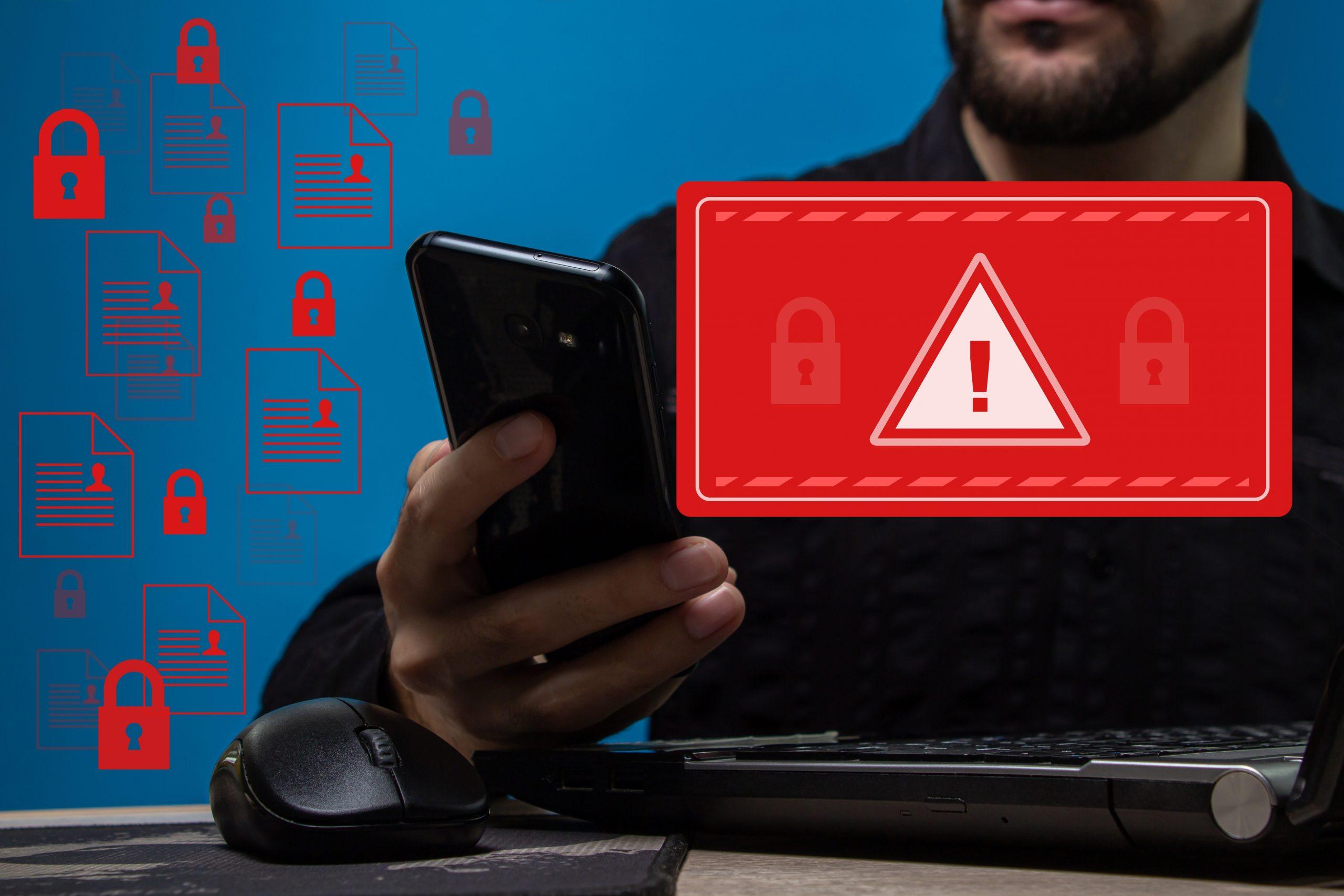












The “FedEx Shipping Labels Documents in PDF Format” email scam is a phishing campaign that impersonates FedEx to trick recipients into opening a malicious link disguised as a shipping document. The email claims that shipping labels or delivery documents are available in PDF format and urges recipients to download them. Instead of providing legitimate shipping paperwork, the link redirects victims to a fraudulent login page designed to harvest email account credentials.
- How FedEx Shipping Labels Documents in PDF Format Email Scam Tricks Users
- Full Text of the FedEx Shipping Labels Documents in PDF Format Email Scam Message
- What Happens If You Fall for FedEx Shipping Labels Documents in PDF Format Email Scam
- Conclusion
- Manual Removal Guide: How to Identify and Remove Email Scams Yourself
- Step 1: Recognizing Scam Emails
- Step 2: Avoid Interacting with Scam Emails
- Step 3: Report the Email Scam
- Step 4: Block the Sender
- Step 5: Check Your Accounts for Compromise
- Step 6: Scan Your Device for Malware
- Step 7: Strengthen Email Security
- SpyHunter Removal Guide: Automated Solution for Email Scam Threats
- Step 1: Download SpyHunter
- Step 2: Install SpyHunter
- Step 3: Perform a Full System Scan
- Step 4: Review and Remove Detected Threats
- Step 5: Enable Real-Time Protection
- Step 6: Keep SpyHunter Updated
- How to Prevent Future Email Scams
- Use a Secure Email Provider
- Avoid Clicking Suspicious Links
- Use a VPN on Public Wi-Fi
- Regularly Change Your Passwords
- Install Anti-Phishing Browser Extensions
- Take Action Now
| Threat Information | Details |
|---|---|
| Threat Type | Phishing Scam, Email Scam, Credential Theft |
| Associated Email | Varies by campaign |
| Detection Names | Phishing, Scam, Social Engineering, Fraud |
| Symptoms | Suspicious shipping notifications, requests to download documents, credential theft, account compromise |
| Damage & Distribution | Email account hijacking, identity theft, financial fraud, distributed through spam emails |
| Danger Level | High |
| Removal Tool | SpyHunter |
How FedEx Shipping Labels Documents in PDF Format Email Scam Tricks Users
The scam arrives as a professional-looking FedEx notification claiming that shipping labels, invoices, or shipping documents are ready for download. The message often includes a PDF filename and instructions to print the documents and prepare a package for shipment.
To create urgency and legitimacy, the email references shipping procedures, package pickups, and customs documentation requirements. Victims who click the provided download button are redirected to a fake login page that mimics a legitimate email provider or webmail service. The page requests the user’s email address and password under the pretense of granting access to the shipping document.
Once credentials are entered, they are transmitted directly to the attackers rather than to the legitimate email provider. The criminals can then access the victim’s mailbox, reset passwords for connected services, launch additional phishing attacks, or sell the stolen credentials on cybercrime marketplaces.
Full Text of the FedEx Shipping Labels Documents in PDF Format Email Scam Message
A common variation of the scam contains text similar to the following:
Subject: FedEx Shipping Documents
Download the PDF file containing your shipping labels and shipping documents. Print the documents and drop off your package at a FedEx location or schedule a pickup.
The wording and tracking numbers may vary between campaigns, but the core objective remains the same: convince recipients to click a malicious link and disclose sensitive information.
What Happens If You Fall for FedEx Shipping Labels Documents in PDF Format Email Scam
If you click the link but do not enter any information, the risk is significantly lower. However, you should still run a security scan and monitor your accounts for unusual activity.
If you entered your login credentials:
- Change the compromised password immediately.
- Change passwords for any other accounts using the same credentials.
- Enable multi-factor authentication (MFA).
- Review recent account activity and security settings.
- Check for unauthorized forwarding rules in your email account.
- Notify your email provider if you suspect account compromise.
Attackers who gain access to an email account can search for financial records, reset passwords for other services, impersonate the victim, and launch additional phishing campaigns from the compromised mailbox.
Community discussions about fake FedEx notifications consistently highlight warning signs such as incorrect logos, suspicious sender addresses, fake tracking information, unusual terminology, and links that do not lead directly to official FedEx domains.
Conclusion
The FedEx Shipping Labels Documents in PDF Format Email Scam is a credential-harvesting phishing campaign that abuses the trust associated with FedEx shipping notifications. While the email appears legitimate at first glance, its real goal is to steal login credentials through a fake authentication page. Never click links or download attachments from unexpected shipping emails. If you receive a package notification, verify shipment details directly through the official FedEx website rather than through links embedded in the message.
Manual Removal Guide: How to Identify and Remove Email Scams Yourself
Step 1: Recognizing Scam Emails
Before taking action, learn to identify email scams. Some common red flags include:
- Unknown Sender: Emails from unfamiliar addresses, especially if they claim to be from banks, tech support, or government agencies.
- Urgent or Threatening Language: Messages pressuring you to act quickly (e.g., “Your account will be suspended!”).
- Poor Grammar & Spelling Mistakes: Many scam emails contain grammatical errors.
- Suspicious Links or Attachments: Hover over links to check if they lead to an unusual website before clicking.
- Requests for Personal or Financial Information: Legitimate companies will never ask for sensitive details via email.
Step 2: Avoid Interacting with Scam Emails
If an email appears suspicious:
- Do NOT click on any links.
- Do NOT download attachments.
- Do NOT reply to the sender.
Step 3: Report the Email Scam
Reporting scam emails helps prevent others from falling victim to them:
- Gmail/Outlook/Yahoo Users: Click “Report Phishing” or “Report Spam” in your email client.
- FTC (U.S. users): Report scams to the FTC Complaint Assistant.
- Google Safe Browsing: Report phishing sites at Google’s Phishing Report.
Step 4: Block the Sender
To prevent further scam emails from the same sender:
- Gmail: Open the email, click the three dots, and select “Block [Sender Name]”.
- Outlook: Open the email, select “Junk” > “Block Sender”.
- Yahoo Mail: Click “More” > “Block Sender”.
Step 5: Check Your Accounts for Compromise
If you’ve interacted with a scam email:
- Change your passwords immediately. Use strong, unique passwords.
- Enable Two-Factor Authentication (2FA). Adds an extra security layer.
- Monitor your banking transactions for suspicious activity.
Step 6: Scan Your Device for Malware
If you accidentally clicked a link or downloaded a file, scan your system for malware:
- Windows Users (Windows Defender)
- Go to Settings > Update & Security > Windows Security > Virus & Threat Protection.
- Click “Quick Scan” or “Full Scan”.
- Mac Users
- Use security software like Malwarebytes for Mac to scan for threats.
Step 7: Strengthen Email Security
- Enable spam filtering in your email provider’s settings.
- Use a third-party spam filter such as Spamihilator or Mailwasher.
- Stay educated on phishing techniques to avoid falling for scams in the future.
SpyHunter Removal Guide: Automated Solution for Email Scam Threats
SpyHunter is a powerful anti-malware tool designed to detect and remove phishing-related threats, Trojans, spyware, and other cyber threats. If you prefer a quick and automated solution, follow these steps:
Step 1: Download SpyHunter
- Visit the official SpyHunter download page: Download SpyHunter
- Click “Download” and save the file.
Step 2: Install SpyHunter
- Open the downloaded file (SpyHunter-Installer.exe).
- Follow the on-screen installation instructions.
- Once installed, launch SpyHunter.
Step 3: Perform a Full System Scan
- Open SpyHunter and go to “Malware/PC Scan”.
- Click “Start Scan Now” to begin scanning.
- SpyHunter will detect threats linked to email scams.
Step 4: Review and Remove Detected Threats
- After the scan completes, SpyHunter will display a list of detected threats.
- Click "Fix Threats" to remove them.
- Restart your computer after removal.
Step 5: Enable Real-Time Protection
- Activate SpyHunter’s Active Guards for real-time malware protection.
- Schedule regular system scans for ongoing security.
Step 6: Keep SpyHunter Updated
- Regularly update SpyHunter to detect new threats.
- To update, go to "Settings" > "Update" and click "Check for Updates".
How to Prevent Future Email Scams
To avoid falling for email scams in the future, follow these precautions:
Use a Secure Email Provider
Consider using encrypted email services like ProtonMail or Tutanota for enhanced security.
Avoid Clicking Suspicious Links
Always verify links before clicking by hovering over them to see the actual URL.
Use a VPN on Public Wi-Fi
Scammers can intercept your data on public networks. Use a VPN for secure browsing.
Regularly Change Your Passwords
Use a password manager to generate and store secure passwords.
Install Anti-Phishing Browser Extensions
Use security extensions like Bitdefender TrafficLight or Avast Online Security to detect phishing attempts.
Email scams pose a significant risk to personal and financial security. By following this manual removal guide, you can effectively identify and remove scam emails. For those seeking a fast and automated approach, SpyHunter provides a reliable solution to detect and remove email scam-related threats.
Take Action Now
Protect your device from scam-related malware with SpyHunter: Download SpyHunter