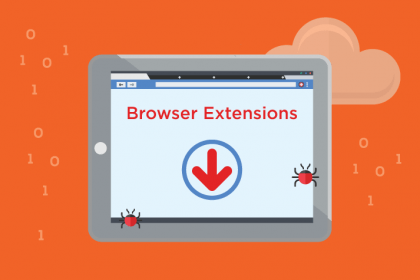

















Giant Coupons Official Extension pretends to help users find discounts and shopping deals, but it actually functions as adware that floods your browser with intrusive advertisements and tracks browsing behavior. Instead of improving your online shopping experience, it injects coupons, banners, and redirect links into websites you visit.
Once installed, this extension can slow down your browser, generate aggressive pop-ups, and potentially expose you to scams or malware through malicious advertising networks.
Cybersecurity for Business
Your business faces constantly evolving cyber threats that can jeopardize sensitive data, disrupt operations, and damage your reputation. Our cybersecurity for business solutions are tailored to meet the unique challenges of companies of all sizes, providing robust protection against malware, phishing, ransomware, and more.
Whether you’re a small startup or a large enterprise, we offer multi-license cybersecurity packages that ensure seamless protection for your entire team, across all devices. With advanced features like real-time threat monitoring, endpoint security, and secure data encryption, you can focus on growing your business while we handle your digital security needs.
Get a Free Quote Today! Safeguard your business with affordable and scalable solutions. Contact us now to request a free quote for multi-license cybersecurity packages designed to keep your company safe and compliant. Don’t wait—protect your business before threats strike!
| Threat Type | Adware / Advertising-Supported Browser Extension |
|---|---|
| Detection Names | Adware.GiantCoupons, PUA:Win32/GiantCoupons, Adware.Plugin.GiantCoupons |
| Symptoms | Pop-up ads, coupon banners, redirected shopping pages, slower browser performance |
| Damage & Distribution | Tracks browsing data, injects ads into websites, often bundled with free software or deceptive download pages |
| Danger Level | Medium |
| Removal Tool | SpyHunter |
Adware like this is designed primarily to generate advertising revenue by injecting ads into web pages and redirecting traffic through affiliate networks. In many cases, it also collects browsing data such as visited sites, search queries, cookies, and device information.
How Giant Coupons Official Extension Affects Your Browser
After installation, Giant Coupons Official Extension integrates directly into your browser as an add-on. Its main purpose is to insert advertising content into pages you visit.
Typical changes include:
- Injected coupon offers and shopping banners
- Pop-ups advertising “limited deals”
- Links replaced with affiliate tracking links
- Ads appearing even on websites that normally show none
Many users notice that legitimate pages suddenly display extra promotional boxes, deal alerts, or auto-opening tabs.
The extension can also modify website code to insert its own ads, meaning you’ll see advertising that isn’t actually part of the original website.
Where Giant Coupons Official Extension Comes From
Most users never intentionally install this extension.
The adware commonly spreads through software bundling, where free programs secretly include additional extensions during installation.
Common infection sources include:
- Freeware download sites
- Fake “coupon” or “deal finder” extensions
- Misleading pop-ups claiming you’ll save money while shopping
- Fake browser updates or ad blocker tools
- Rogue advertising networks
During installation, the extension may be hidden inside “Quick” or “Recommended” setup options, causing it to install automatically if users don’t manually deselect it.
Is Giant Coupons Official Extension a Real Threat?
While not as destructive as ransomware or banking trojans, Giant Coupons Official Extension still poses real risks.
Potential problems include:
- Privacy issues – browsing activity and personal data may be collected
- Malicious redirects – ads may lead to scam or phishing websites
- Additional malware infections – some ads trigger stealth downloads
- Slower browser performance
- Unwanted browser changes
Adware campaigns often use affiliate programs to generate profit, meaning scammers may promote fake products, tech-support scams, or rogue software through these advertisements.
Because of these risks, security experts classify such extensions as Potentially Unwanted Programs (PUPs) and recommend removing them.
Manual Adware Removal (Windows & Mac)
Step 1: Identify Suspicious Applications
For Windows Users
- Press
Ctrl + Shift + Escto open the Task Manager. - Check the “Processes” tab for unfamiliar or suspicious programs consuming excessive CPU or memory.
- If you find any, note their names and close them.
- Open
Control Panel>Programs>Programs and Features. - Locate the suspicious application, right-click it, and select “Uninstall.”
For Mac Users
- Open
Finderand navigate toApplications. - Look for any suspicious or unknown applications.
- Drag them to the
Trash, then right-click on theTrashand selectEmpty Trash. - Open
System Preferences>Users & Groups>Login Itemsand remove any unrecognized startup programs.
Step 2: Remove Adware-Related Browser Extensions
Google Chrome
- Open Chrome and go to
Menu(three dots in the top-right corner) >Extensions. - Locate suspicious extensions and click “Remove.”
- Reset Chrome: Go to
Settings>Reset settings> “Restore settings to their original defaults.”
Mozilla Firefox
- Open Firefox and go to
Menu(three lines in the top-right corner) >Add-ons and themes. - Locate and remove suspicious extensions.
- Reset Firefox: Go to
Help>More troubleshooting information> “Refresh Firefox.”
Safari (Mac)
- Open Safari and go to
Preferences>Extensions. - Locate and remove any unknown extensions.
- Reset Safari: Go to
History> “Clear History.”
Microsoft Edge
- Open Edge and go to
Menu(three dots in the top-right corner) >Extensions. - Remove suspicious extensions.
- Reset Edge: Go to
Settings>Reset settings> “Restore settings to their default values.”
Step 3: Delete Adware-Related Files and Folders
For Windows Users
- Press
Win + R, type%AppData%, and press Enter. - Look for suspicious folders and delete them.
- Repeat for
%LocalAppData%,%ProgramData%, and%Temp%.
For Mac Users
- Open Finder, press
Shift + Command + G, and enter~/Library/Application Support/. - Locate and delete suspicious folders.
- Repeat for
~/Library/LaunchAgents/,~/Library/LaunchDaemons/, and~/Library/Preferences/.
Step 4: Flush DNS Cache (Recommended)
For Windows Users
- Open
Command Promptas Administrator. - Type
ipconfig /flushdnsand press Enter.
For Mac Users
- Open
Terminal. - Type
sudo killall -HUP mDNSResponderand press Enter.
Step 5: Restart Your Computer
Restart your device to complete the manual removal process.
Automatic Adware Removal Using SpyHunter (Windows & Mac)
For a hassle-free and effective removal, use SpyHunter, a robust anti-malware tool designed to detect and remove adware efficiently.
Step 1: Download SpyHunter
Download SpyHunter from the official website: Click here to download SpyHunter.
Step 2: Install SpyHunter
Follow the installation instructions based on your operating system:
For Windows Users:
- Open the downloaded
.exefile. - Follow the on-screen installation instructions.
- Launch SpyHunter and allow it to update its malware definitions.
For Mac Users:
- Open the downloaded
.dmgfile. - Drag and drop SpyHunter into the Applications folder.
- Launch SpyHunter and allow it to update its malware definitions.
Step 3: Perform a System Scan
- Open SpyHunter.
- Click on
Start Scan. - Wait for the scan to complete.
- Review the detected threats and click
Fix Threatsto remove adware.
Step 4: Restart Your Device
After SpyHunter removes the threats, restart your computer to finalize the process.
For the most secure and effective removal, we recommend downloading and using SpyHunter: Download SpyHunter Here.
Stay safe and keep your system clean!
Conclusion
Giant Coupons Official Extension is not a legitimate shopping tool. It’s an adware browser add-on designed to inject advertising, redirect users to affiliate offers, and collect browsing data.
If you notice unexpected coupons, pop-ups, or redirects while browsing, check your installed extensions immediately. Removing the extension and scanning your system with a trusted anti-malware tool is the safest way to restore normal browser behavior.