






Google–Wiz Acquisition – Latest Cybersecurity News & Impact
Google has completed its largest acquisition ever, buying cloud security company Wiz for $32 billion and signaling a major shift in the cloud cybersecurity market. The deal, finalized in March 2026, brings the rapidly growing cloud security platform Wiz into Google Cloud’s security stack. At the same time, a separate industry move saw risk advisory firm K2 Integrity acquire Leviathan Security Group, highlighting how consolidation is accelerating across the cybersecurity sector. What Happened With the Google–Wiz Acquisition Google officially closed its $32 billion acquisition of Wiz, making it the largest purchase in the company’s history and one of the biggest cybersecurity deals ever recorded. Wiz is known for its multi‑cloud security platform, which helps organizations identify vulnerabilities and security risks across cloud environments like AWS, Microsoft Azure, and Google Cloud. Key details of the acquisition: Google leadership framed the acquisition as a response to a new reality: as companies migrate critical infrastructure to the cloud and adopt AI, cybersecurity has become a core requirement rather than an optional add‑on. Who the Google–Wiz Deal Affects The acquisition has implications across several sectors: 1. Enterprise Cloud Customers Businesses running workloads in multi‑cloud environments stand to benefit from deeper integration between cloud infrastructure and security tools. 2. Cloud Providers Google is strengthening its position against major competitors: By integrating Wiz technology, Google Cloud aims to offer security capabilities directly embedded into the cloud platform. 3. The Cybersecurity Startup Ecosystem The deal represents a massive exit for the cybersecurity startup world. Wiz, founded by Israeli entrepreneur Assaf Rappaport, became one of the fastest‑growing security startups before the acquisition. It also signals strong investor demand for companies focused on:…


UHMC Cybersecurity Clinic for Small Businesses – Latest Cybersecurity News & Impact
A new cybersecurity initiative in Hawaiʻi is giving small businesses something many can’t usually afford: expert security guidance at no cost. The program aims to help entrepreneurs identify digital risks, assess vulnerabilities, and strengthen defenses before attackers exploit weaknesses. What Happened With UHMC Cybersecurity Clinic for Small Businesses The University of Hawaiʻi Maui College (UHMC) announced a free online cybersecurity clinic session titled “Cybersecurity Risk Management and Vulnerability Assessments for Small Businesses.” The event is scheduled for March 18, 2026, from 12–1 p.m. HST via Zoom. This session is the third and final webinar in a series designed to help small business owners understand cybersecurity risks and take practical steps to protect their operations. Participants will learn: The session will be led by IT and cybersecurity educator David Stevens, who emphasizes that many businesses only realize they’re targets after a breach occurs. Who UHMC Cybersecurity Clinic for Small Businesses Affects The initiative is designed primarily for: These groups often lack dedicated security teams, making them attractive targets for cybercriminals. Even simple vulnerabilities—like outdated software or weak passwords—can expose sensitive data or disrupt operations. The free clinic specifically targets businesses across Hawaiʻi, but the lessons apply broadly to any organization trying to improve its cybersecurity posture on a limited budget. Expert Commentary on UHMC Cybersecurity Clinic for Small Businesses The clinic is part of a broader push to strengthen community cybersecurity through academic programs. The initiative received $1 million in funding from Google’s Cybersecurity Clinics Fund, helping launch one of 15 new university-based cybersecurity clinics across the United States. These clinics operate under the model supported by the Consortium of Cybersecurity Clinics, where students and faculty provide cybersecurity assistance to organizations that otherwise couldn’t afford professional security services. The model benefits both sides: University-led clinics have increasingly become a practical defense layer for smaller organizations that sit outside traditional enterprise security ecosystems.…

Telus Cybersecurity Incident – Latest Cybersecurity News & Impact
A major data breach linked to the ShinyHunters hacking group could involve hundreds of terabytes—or even a petabyte—of stolen data. A large cybersecurity incident involving Telus, one of Canada’s biggest telecommunications and digital services companies, is currently under investigation. The company confirmed that attackers gained unauthorized access to some internal systems after claims by the cyber‑extortion group ShinyHunters that it stole massive amounts of data. The scale of the alleged breach has drawn global attention, with hackers claiming to have exfiltrated hundreds of terabytes to nearly 1 petabyte of data, which would make it one of the largest telecom‑related cyber incidents in recent years. What Happened With the Telus Cybersecurity Incident The breach centers around systems belonging to Telus and its digital services division, Telus Digital, which provides business process outsourcing and support services for companies around the world. Key details currently known: The company is currently working with cyber‑forensics teams and law enforcement while determining exactly what information may have been exposed. Who the Telus Cybersecurity Incident Affects The potential impact goes far beyond a single company. According to reports and samples shared by the attackers, the stolen data may include: Because Telus Digital operates outsourced support and customer‑service platforms for many organizations, a breach there could expose information from numerous companies at once. Expert Commentary on the Telus Cybersecurity Incident Security researchers describe the attack as a targeted data‑extortion operation rather than traditional ransomware. Instead of immediately encrypting systems, attackers appear to have: That tactic is common for ShinyHunters, a cybercrime group active since 2019 that has carried out numerous high‑profile data breaches and extortion campaigns against global companies. In this case, the attackers claim they accessed Telus systems using cloud credentials obtained during another breach involving the Salesloft Drift platform. How to Stay Safe From the Telus Cybersecurity Incident Even if you’re not a Telus customer, breaches involving service providers can still affect your data indirectly.…

Digital Lifeline: Why 2026 is the Year Healthcare Cybersecurity Became Critical
African healthcare providers are facing a 38% surge in cyberattacks as of early 2026, forcing a shift from treating digital…

Zero Trust: How a Security Idea Became a Blueprint
Breaches That Broke the Castle When ransomware hit a midsize hospital’s scheduling system last spring, clinicians reverted to pen and…

Cybersecurity Law Expiration Could Unleash New Ransomware Surge – Former FBI Official Sounds the Alarm
Unless Congress acts swiftly, the United States could lose one of its most effective shields against ransomware and nation-state cyberattacks.…

Under the Hood of Microsoft’s May 2025 Patch Tuesday: The CLFS and WinSock Problem Microsoft Can’t Seem to Fix
This month’s Patch Tuesday—Microsoft’s monthly tradition of plugging digital holes—landed with the usual volume: 78 vulnerabilities patched across its software ecosystem.…

The Hidden Sabotage: How Malicious Go Modules Quietly Crashed Linux Systems
In an incident that highlights the deepening crisis of trust in open-source software, security researchers have uncovered a destructive campaign…

Agentic AI: The Next Frontier in Cybersecurity Defense and Risk
As cyber threats grow more sophisticated in 2025, a new class of artificial intelligence—agentic AI—is emerging as both a powerful…

Cybersecurity CEO Arrested for Allegedly Installing Malware on Hospital Computers: A Stark Reminder of Insider Threats
In a shocking twist that highlights the vulnerabilities within even trusted institutions, a cybersecurity CEO—ironically a guardian against digital threats—has…

Cybercriminals Hijack Google’s Reputation
Introduction: A Trust Betrayed When we see “no-reply@google.com” in our inbox, we instinctively trust it. It’s Google, after all. But…
Apple and Google Join Forces to Patch Actively Exploited Zero-Day Vulnerabilities in iOS and macOS
Apple and Google collaborate to fix two critical zero-day vulnerabilities affecting iOS 18.4, macOS Sequoia 15.4, and more. Learn what…

Chinese Cyber Espionage Group UNC5174 Deploys SNOWLIGHT and VShell in Stealthy Linux and macOS Attacks
A Chinese state-sponsored cyber espionage group, UNC5174—also known by the alias "Uteus"—has resurfaced with a sophisticated campaign targeting Linux and…

China Accuses U.S. NSA of Cyberattacks During 2025 Asian Winter Games
In a dramatic escalation of cyber espionage allegations between two global powers, Chinese authorities have formally accused the United States…

Whistleblower Alleges DOGE-Linked Cybersecurity Breach at NLRB
A whistleblower has come forward with explosive allegations that Elon Musk's controversial federal initiative, the Department of Government Efficiency (DOGE),…

The Pulse of Cyber Defense — CVE Program Averted from Collapse in the Nick of Time
In a dramatic eleventh-hour move, the Common Vulnerabilities and Exposures (CVE) program—the centralnervous system of global cybersecurity—was rescued from an…

Inside the Backdoor: How Persistent Threat Actors Exploit FortiGate Weaknesses
In a sobering development for network security professionals worldwide, Fortinet has issued a detailed warning that advanced persistent threat (APT) actors have…

Hackers Hijack Crypto Libraries to Target Developers
A sophisticated new wave of cyberattacks is exploiting the software supply chain, with threat actors hijacking legitimate cryptographic libraries and…

Chrome 136’s Update Marks a Milestone in Browser Privacy
Google's latest update to its Chrome browser, version 136, signifies a pivotal advancement in user privacy protection. For over twenty…

Crypto Wallets Targeted in Sophisticated npm Supply Chain Attack
A newly discovered malware campaign is exploiting the npm software supply chain to compromise popular cryptocurrency wallets, including Atomic and…
Decrypting EncryptHub: The Dual Life of a Bug Hunter Turned Cybercriminal
In a startling revelation that reads like a cybersecurity thriller, a new report by Outpost24's Kraken Labs has unmasked the double life of an…
Critical Security Flaw CVE-2025-22457 in Ivanti Products
In April 2025, Ivanti disclosed a critical vulnerability—CVE-2025-22457—affecting multiple enterprise security products, including Ivanti Connect Secure, Policy Secure, and ZTA Gateway. With a…
Outlaw Malware: A Persistent Threat Exploiting Linux Servers
The Outlaw malware campaign, active since at least 2018, continues to pose a significant threat to Linux servers by employing…
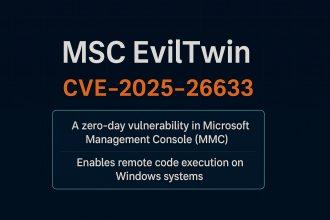
MSC EvilTwin (CVE-2025-26633): A Silent Saboteur in Microsoft’s MMC Console
In early 2025, cybersecurity professionals raised the alarm on a zero-day exploit in Microsoft’s Management Console (MMC), now cataloged as CVE-2025-26633 and…

SUN:DOWN Vulnerabilities in Solar Energy Systems Raise Alarming Concerns for Grid Security
A recent report from Forescout’s Vedere Labs has uncovered a significant and concerning set of cybersecurity vulnerabilities affecting solar energy systems produced…
Remove CVE-2025-29927: Critical Next.js Authorization Bypass Flaw
A newly disclosed critical security vulnerability in the popular Next.js React framework, tracked as CVE-2025-29927, has sent ripples through the…

CVE-2024-48248: Critical NAKIVO Backup & Replication Flaw Actively Exploited—Patch Immediately
The U.S. Cybersecurity and Infrastructure Security Agency (CISA) has identified a severe vulnerability in NAKIVO Backup & Replication software, adding…

Microsoft Patches Critical Security Flaws in Azure AI Face Service and Microsoft Account
Threat Overview Microsoft has recently addressed two critical security vulnerabilities that posed potential threats to its cloud-based services. The security…

Activation Lock on Apple Devices
The Activation Lock feature, introduced by Apple with the release of iOS 7 in 2014, was designed to protect users'…
Salt Typhoon Hackers: A Looming Threat in Telecom Networks
The Salt Typhoon hacker group, believed to have ties to the Chinese government, has proven to be a persistent and…

MediaFire Malware Threat: How to Protect Yourself
MediaFire is a well-known file-sharing platform that many users rely on for cloud storage and sharing documents. However, it has…

The November 2024 Patch Tuesday and CVE-2024-49039: Addressing Critical Vulnerabilities
The November 2024 Patch Tuesday update by Microsoft addresses a critical vulnerability, CVE-2024-49039, which has been actively exploited. This flaw…

Cybersecurity Awareness Month: Protecting Our Digital World
Every October, Cybersecurity Awareness Month serves as a crucial reminder of the importance of cybersecurity and the role each of…
Understanding CVE-2024-43573 and CVE-2024-43572: An Overview
In October 2024, Microsoft released crucial patches addressing a variety of vulnerabilities, among which CVE-2024-43573 and CVE-2024-43572 stand out due…

GoldenJackal Threat Actor: A Deep Dive Into Tactics and Prevention
The GoldenJackal is a sophisticated cyber-espionage group that surfaced in 2019, suspected of being state-sponsored and likely connected to Russian…

U.S. Government Launches Major Initiatives to Strengthen Cybersecurity Workforce and Federal Defenses
The U.S. government is launching two pivotal initiatives aimed at bolstering the nation's cybersecurity workforce and strengthening federal cyber defenses.…

Understanding the Vulnerabilities in Azure AI Health Bot Service
Recently, cybersecurity researchers discovered two critical vulnerabilities in Microsoft's Azure Health Bot Service. These flaws, if exploited, could allow malicious…

Microsoft Warns of Unpatched Office Vulnerability: What You Need to Know and How to Stay Safe
Microsoft has recently issued a warning about a critical vulnerability affecting its Office suite, posing significant risks to users. This…

OpenVPN Vulnerabilities: A Comprehensive Look
In a recent revelation by Microsoft researchers, several critical vulnerabilities were discovered in OpenVPN, one of the most popular open-source…

WPTHRIVEHYPE: A Comprehensive Guide to Understanding and Removing This Cyber Threat
In the realm of cybersecurity, vigilance is paramount. One such threat that has emerged on the horizon is WPTHRIVEHYPE, a…
Protecting Your Online Security: The Threat of Malware on Chrome
With the internet becoming an integral part of our daily lives, ensuring online security is paramount. However, cyber threats continue…

AutoIt V3 Script Malware: Actions, Consequences, and Removal Guide
In the ever-evolving landscape of cybersecurity threats, the emergence of AutoIt V3 script malware has raised significant concerns among users…
ShadowRay Cyber Threat: Protecting Your AI Infrastructure
In the ever-evolving landscape of cybersecurity, new threats emerge that challenge the very foundations of our digital infrastructure. One such…
CVE-2024-20337: Cisco Secure Client Vulnerabilities: Patching the Gateway to Cyber Threats
In a bid to fortify its cybersecurity defenses, Cisco recently uncovered and swiftly addressed high-severity vulnerabilities within its Secure Client…
CVE-2023-43770 Exploited in Roundcube Email Software
In a recent development, the U.S. Cybersecurity and Infrastructure Security Agency (CISA) has identified a critical vulnerability in the Roundcube…
RustDoor macOS Backdoor: A Covert Threat Connected to Ransomware Groups
In a concerning revelation, security researchers have uncovered a highly sophisticated backdoor targeting macOS named RustDoor, also identified as Trojan.MAC.RustDoor.…

Raspberry Robin Malware: N-Day Exploits and Advanced Evasion Tactics
Recent developments in the Raspberry Robin malware have set off alarms within the cybersecurity community, signaling increased stealth and the…

CVE-2023-40547: Critical Shim RCE Vulnerability Shakes Foundations of Linux Distros
In a recent revelation, the developers of shim, a pivotal component serving as the first-stage boot loader on UEFI systems,…
CVE-2023-6246: GNU C Flaw Exposes Linux to Local Privilege Escalation
A critical security vulnerability, tracked as CVE-2023-6246, has been disclosed in the GNU C library (glibc), raising significant concerns in…
Critical File Writing Vulnerability (CVE-2024-0402) in GitLab: A High-Risk Flaw
A critical file writing vulnerability, identified as CVE-2024-0402, has been uncovered in GitLab CE/EE, impacting versions ranging from 16.0 to…